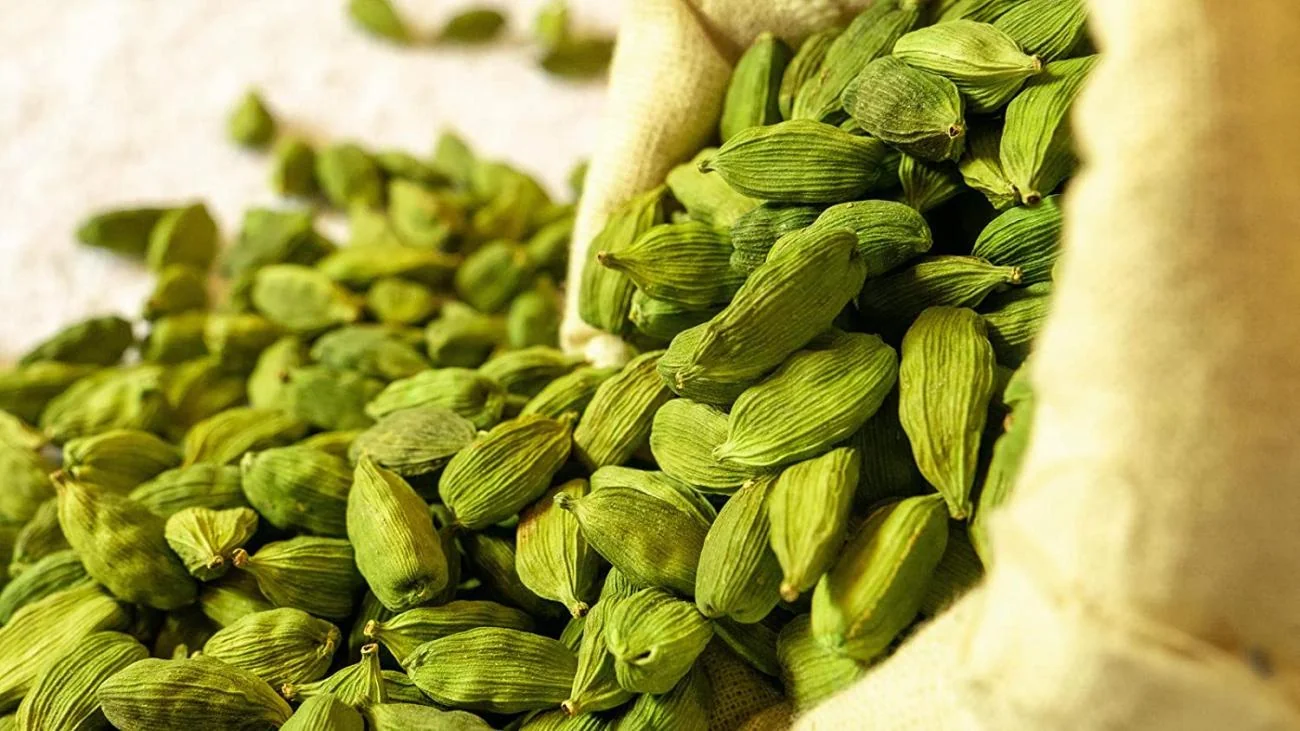
Who does not like cardamom? A tricky question indeed. Cardamom, the queen of spices, lives up to the title every day. Evergreen in its uses and benefits, it flavours sweet and savoury dishes across Indian, Middle Eastern, Arabic and Scandinavian cooking. It appears as whole pods, loose seeds and ground powder, anchors the garam masala behind countless Indian dishes, and perfumes everything from masala chai to Turkish coffee.
What is cardamom?
Cardamom is the seed pod of plants in the ginger family. The pods are spindle-shaped with a triangular cross-section, holding small dark seeds that carry the spice's aroma.
Varieties of cardamom
There are two main types: green and black. White cardamom also exists, but it is simply a bleached version of green. Green cardamom, the true cardamom, is the most widely used, prized in Indian and Nordic and Middle Eastern kitchens for sweets, spiced dishes and even fragrant basmati rice. In India, recipes often specify green or black cardamom deliberately, because the two behave differently.
What does it taste like?
Cardamom has a strong, sweet, pungent aroma layered with flavour. Black cardamom adds a smoky depth with a cool, menthol-mint edge.
Cardamom in the kitchen
Black cardamom is usually cooked as a whole pod that is discarded before serving. With green cardamom, whole pods give the best result; pre-ground spice loses its essential oils and fades quickly. For beverages, lightly crushed seeds work better than whole pods. Sweden famously bakes cardamom into seasonal breads and pastries, while Indian kitchens blend it with cinnamon, nutmeg and cloves into garam masala. Cardamom ice cream in summer is a delight of its own.
Why is green cardamom so expensive?
After saffron and vanilla, green cardamom is the third most expensive spice in the world. The reason is labour. Each pod must be picked by hand at about three-quarters ripeness, so far more time and care go in than for crops that can be harvested mechanically. In India's Idukki district, growing families have cultivated the spice for generations using traditional methods. An acre of cardamom yields only around 50 to 150 pounds of spice, while demand stays consistently high. Scarce supply, intensive labour and constant demand: that is the arithmetic behind the price.
The benefits that justify the cost
- Rich in antioxidants that also support restful sleep
- Aids digestion with its natural cooling effect
- Freshens breath with its minty, pungent aroma
- Associated with lower blood pressure and better circulation
- Rich in manganese, which supports blood sugar regulation
- Supports energy metabolism, an ally for weight management
Substitutes and storage
Finding a true substitute for cardamom is famously hard. In a pinch, a blend of ground cloves with ginger, or cinnamon with nutmeg, can approximate its warmth. Store whole pods in a cool, dry, sealed container; ground cardamom should be stored the same way and used quickly before it loses potency. Green cardamom is easy to find in any supermarket spice aisle, while black cardamom usually needs a speciality store.